


We rely on our electrical sockets to enable us to use all the technology we have today. But sometimes we’re guilty of overloading these sockets since we use so many appliances these days.
In reality, you should never overload your electrical sockets. But why? There are some simple reasons why you shouldn’t – and these could save your family from danger.
You could trip your electrics
If you overload your sockets, at best you could blow a fuse and trip your electrics. You could damage your appliances or the socket or extension lead itself.
Overloading electrical sockets causes fires
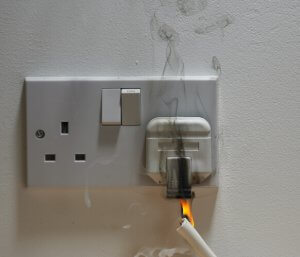 At worst, you could cause a fire by overloading your sockets. Electrical sockets don’t take kindly to being overloaded and can get too hot or spark, causing a fire.
If you’re already using an extension lead, it’s best not to use more extension leads or cubes in a socket as they won’t be able to take the additional amps.
How to avoid electrical fires from sockets
Luckily, there are easy ways to avoid the risk of fire from an electrical socket. Take care with your appliances and you will keep you and your family safe.
Check your plugs and wiring
Make it a regular habit to check your plugs to see if they’re hot. Also look out for loose wiring in appliances and plugs. If your fuses blow often, it’s a sign that there’s an appliance or socket that’s going wrong somewhere.
Beware of different appliances
 Different types of appliances use varying amounts of power. For example, your vacuum cleaner might use a 5 amp plug, but your television might use a 3 amp plug.
It’s a good idea to keep these appliances in separate sockets.
Give high-powered appliances their own socket
Larger appliances that do a lot of work deserve undivided attention from a socket. Fridges and washing machines should have a socket to themselves as they use so much power.
Be careful with extension leads
We all have to use extension leads and plug adaptors somewhere, but use them with care. Don’t overload these extensions with more extensions as this will dramatically increase the risk of fire.
Check the rating of your extension lead
Most extension leads are 13 A these days, but always check before you buy. Some may be 10 A or lower.
If you can’t see a rating on the packaging of an extension lead, don’t buy it.
Check the appliances you plug into an extension lead
Make sure that you don’t exceed the current rating for the extension lead. If you plug in appliances that together exceed the rating, you could cause the plugs and wall socket to overheat.
As long as you take the necessary precautions to avoid overloading your electrical sockets, you will never have any problems. Extension leads are handy and a cost-effective way to avoid needing more sockets installed. But is it about time that you asked an electrician to install more sockets to avoid you overloading your current ones?
Source:
Label Bar